
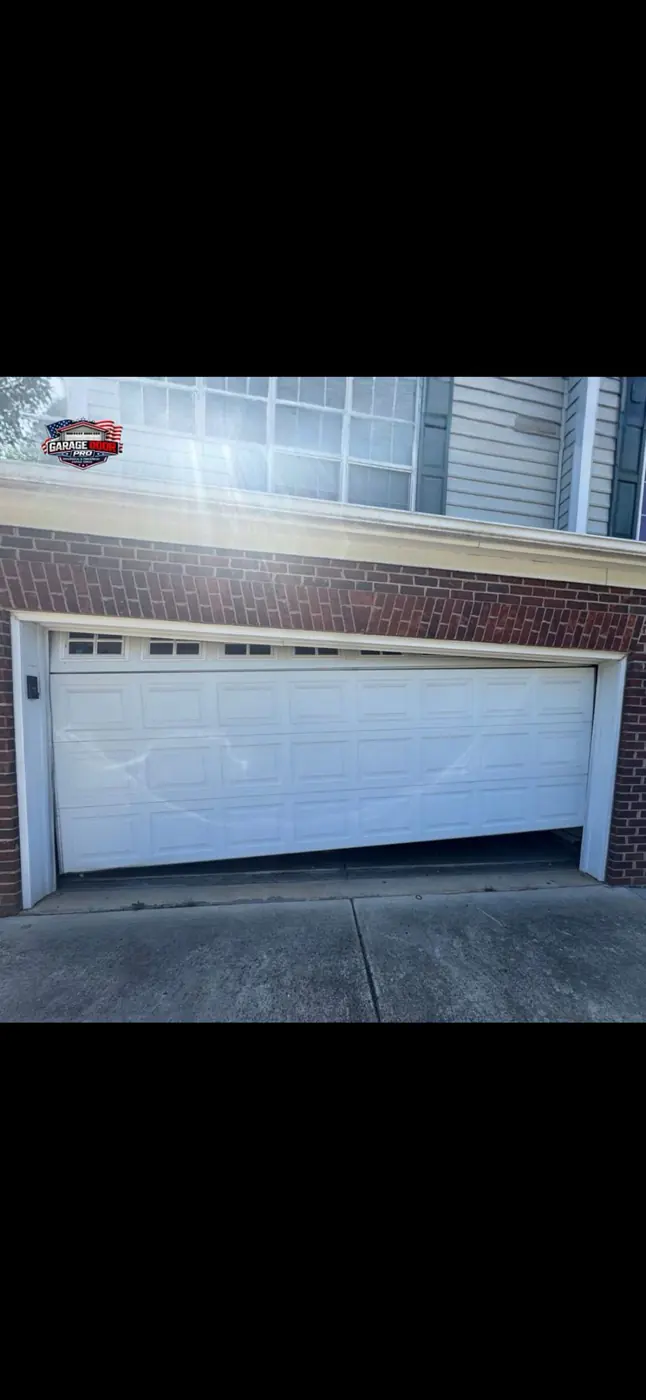
Short answer: most garage doors that won’t close are being stopped by the safety sensors near the floor: something is in the beam, the lenses are dirty, or one sensor has been knocked out of line. If the sensors are fine, the next suspects are the remote or wall button, the opener’s lock setting or close limit, a door that is binding or off its track, and finally a broken spring or cable. Start with the quick, safe checks below and stop the moment you see a broken spring, a loose cable or a door hanging crooked. Those need a technician.
The table gives the short version. Each cause is explained underneath.
| What you see | Likely cause | Safe to check yourself? |
|---|---|---|
| Door starts down, then reverses; opener light flashes | Sensors blocked, dirty or misaligned | Yes |
| Closes only while you hold the wall button | Sensor problem | Yes |
| Nothing happens from the remote, wall button works | Remote battery or programming | Yes |
| Nothing happens from the wall button either | Lock mode, power or the opener | Partly |
| Door hits the floor and goes back up | Close limit or force setting | Adjust with the manual, or call |
| Door stops partway, grinds or shudders | Track, rollers or binding | Look only, then call |
| Door hangs crooked or one side is lower | Cable off its drum or frayed | No, call |
| Door very heavy, loud bang earlier | Broken spring | No, call |
| Opener hums, door does not move | Opener gear or a broken spring | Call |
1. Are the safety sensors blocked or dirty?
Every opener sold in the United States has to reverse when something is in the way. The Consumer Product Safety Commission explains that this has been required for openers made since the early 1990s, and that the extra protection usually takes the form of an electric eye: a pair of small sensors mounted a few inches above the floor on either side of the door. If the invisible beam between them is broken, the door will not close, or it will reverse.
Look along the bottom of the door opening for anything in the beam: a bin, a bike wheel, a box, leaves or a spider web on the lens. Wipe both lenses with a soft dry cloth. Low sun shining straight into a sensor late in the day can also interrupt the beam on some models.
2. Is one sensor knocked out of line?
Sensors are mounted on thin brackets that are easy to bump with a car, a bike or a broom. Each sensor has a small light. On many openers one light shows the sensor is sending and the other shows it is receiving; if the receiving light is off or flickering, the pair is out of line. Gently bend the bracket back until both lights are steady, and check the wire to each sensor has not been pulled loose or chewed.
Many openers also flash their light bulb when they refuse to close because of the sensors. The pattern differs by brand and model, so check your opener’s manual for what its flashes mean.
3. Is the remote or keypad the problem?
If the wall button closes the door but the remote does not, the door is fine. Replace the remote battery first. If that does not help, the remote may need reprogramming to the opener, which your opener’s manual explains step by step. A keypad on the outside wall works the same way: new battery, then reprogram.
4. Is the opener locked or without power?
Many wall buttons have a lock or vacation setting that stops remotes from working. If it was pressed by accident, the door may not respond from the remote at all. Check that the opener is plugged in and that the outlet has power, and look for a tripped breaker or GFCI outlet in the garage. If the opener lights do not come on at all, the problem is power or the opener itself.
5. Does the door touch the floor and then go back up?
If the door closes all the way, touches the ground and then reverses, the opener thinks it has hit an obstacle. The usual reasons are a close limit set too far (the opener keeps pushing after the door has landed) or a force setting that is too sensitive. Both can be adjusted on the opener, and your manual shows how. Make small changes only, and run the reverse test below afterwards. If you are not comfortable adjusting it, our opener service covers limit and force setup.
6. Is something in the track, or is a roller damaged?
Close the door with your eyes on the tracks. A door that stops partway, shudders or grinds may be catching on a dent in the track, a loose track bolt, a worn roller or something stored too close to the track. Look, but do not hammer the track straight or loosen its bolts: the track holds a heavy moving door. DASMA advises that a door struggling to move may be out of balance or have a problem with its springs, which is a job for a technician.
7. Is the door off its track?
A door that has jumped its track hangs crooked, with rollers outside the track or panels bent. This is common after a car bumps the door or the door is forced against an obstacle. Do not run the opener and do not try to pull the door back into the track. It is heavy, under spring tension and can fall. Unplug the opener and contact us. Off-track doors are part of our garage door repair service.
8. Is a cable broken or off its drum?
Lift cables run from the bottom corners of the door to the drums or pulleys above. If one cable breaks or slips off, that side of the door drops lower and the door closes unevenly or jams. Cables are under high tension, and DASMA says only a trained door systems technician should replace them. Keep clear, leave the door where it is and call.
9. Is a spring broken?
A broken spring often announces itself with a loud bang from the garage. Afterwards the door feels extremely heavy, the opener may lift it a few inches and stop, or the opener hums and nothing happens. Look above the door: a torsion spring with a visible gap in the coil is broken. Extension springs along the tracks may hang loose. Do not try to close the door by hand or with the opener. Our trucks carry common springs, so most spring repairs are finished on the first visit.
How do you test that the door reverses safely?
After any fix, test the reversing feature. The Consumer Product Safety Commission recommends this simple test: lay a 2x4 piece of wood flat on the floor in the door’s path and close the door. When it touches the wood, the door should stop and reverse. If it does not, the opener needs adjustment or repair, and the door should not be used with the opener until it is fixed. The CPSC suggests repeating this test every month.
Also wave an object through the sensor beam while the door is closing. The door should stop and go back up.
When should you stop and call a technician?
Stop and call if you see any of these:
- A broken spring, or you heard a loud bang
- A frayed, loose or slack cable
- The door hanging crooked or off its track
- Bent or cracked bottom brackets
- The door fails the 2x4 reverse test after adjustment
These parts are under tension and can cause serious injury. Unplug the opener so nobody runs it by accident, keep children and pets away, and request service. Garage Door Pro is licensed & insured, gives free estimates and tells you the price before any work starts. Same-day service is available when the schedule allows. See our garage door repair and opener repair pages for details.
Frequently asked questions
Why does my garage door close only when I hold the button?
On most openers, holding the wall button down overrides the safety sensors so the door can close. If that is the only way it closes, the sensors are blocked, dirty or out of alignment. Fix the sensors rather than relying on the hold-to-close: they are what stops the door on a person, pet or car.
Why does my garage door go down and then back up?
A door that reverses on its own either has a sensor problem, something in its path, or the opener thinks it has hit an obstacle because the door is binding, out of balance or the close limit is set wrong. Check the sensors and the floor first, then call if it continues.
Can I close a garage door manually?
Usually yes, with the emergency release, but only if the springs and cables are intact and the door is on its tracks. If a spring is broken the door is very heavy and can drop fast. If in doubt, leave it and call us.
Is it safe to leave my garage door open overnight?
It is a security risk rather than a mechanical one. If the door will not close and you cannot find the cause, call us: same-day service is available when the schedule allows.